There’s something quietly powerful about sitting at a table with children, supplies scattered around, and working on something together. No screens. No pressure to be perfect. Just hands busy, imaginations flowing, and connection happening almost without trying.
Creative activities can be deeply therapeutic for children and adults alike. Crafting offers a chance to slow down, regulate emotions, and express thoughts or feelings that may be hard to put into words. When adults work alongside children (instead of directing from the sidelines), it reinforces safety, cooperation, and trust.
Crafts naturally invite flexibility, and there’s no right or wrong, so they can release tensions of expectations and release creativity. They can be simplified or made more complex, adapted for different ages, abilities, or attention spans, and enjoyed one-on-one or with a whole group. That makes them perfect for families with kids at different developmental stages or for gathering a few friends together for a shared activity.
Here are a few budget-friendly, low-pressure craft ideas for a variety of ages that can be done with simple, affordable materials you may already have at home:
Preschool to Early Elementary
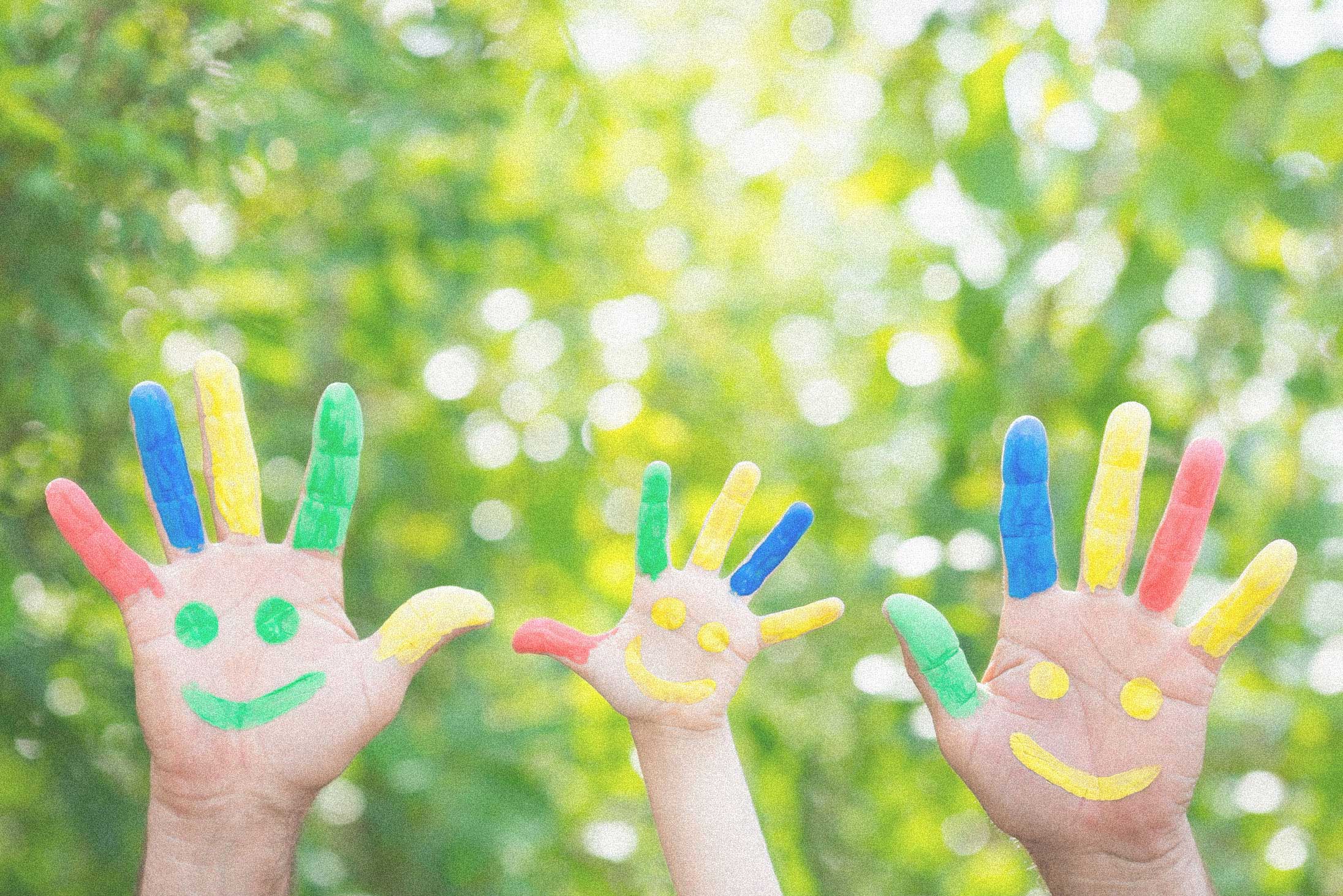
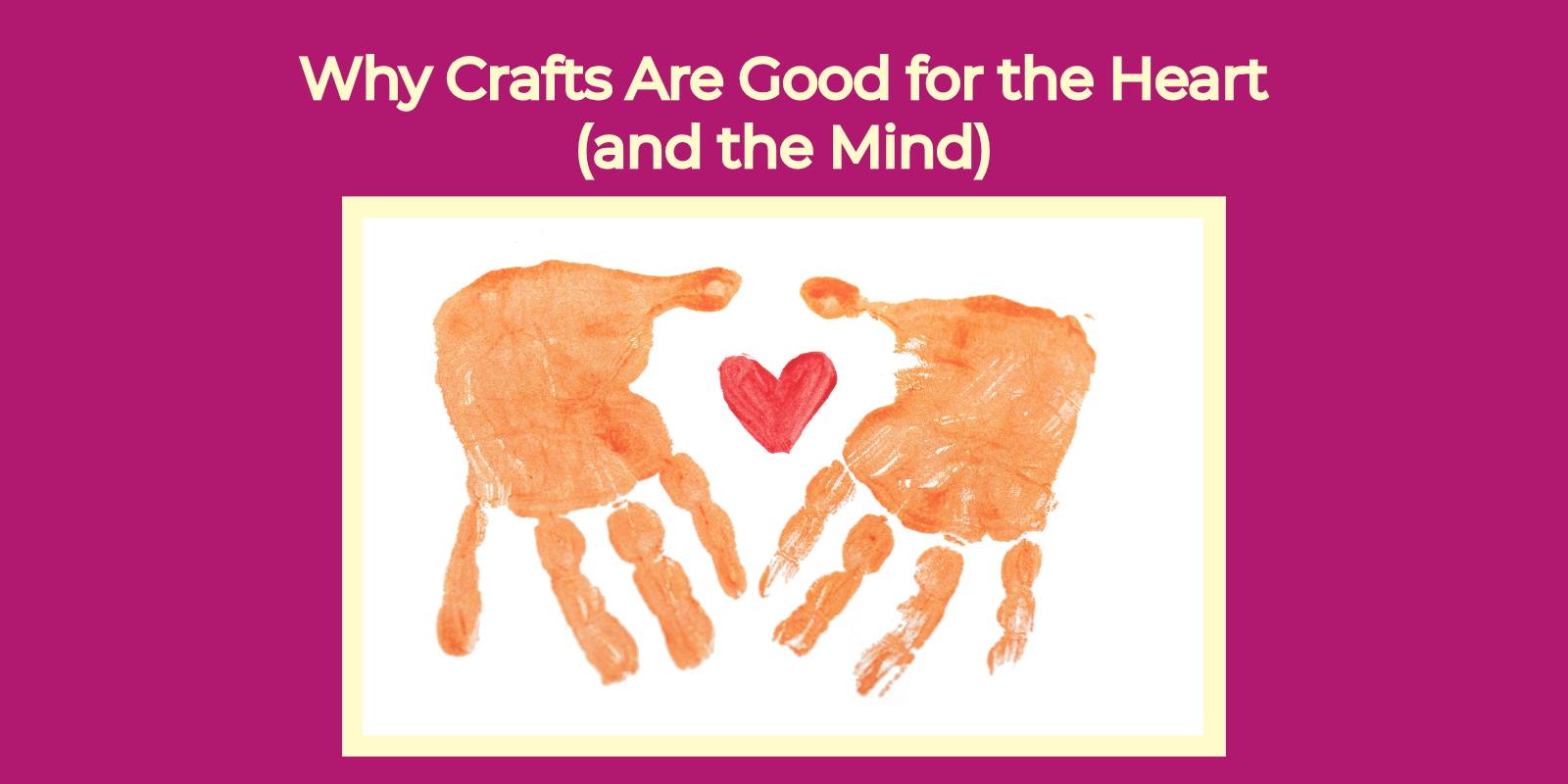
Heart Handprints
Paint each hand and stamp two prints together to form a heart. Add names and a date.
Why it works: Sensory input from paint can be calming, and handprints create a tangible memory kids love revisiting.
Sticker Heart Cards
Fold paper in half, draw half of a heart centered on the fold, and help children cut out a symmetrical heart shape, then they can decorate it with stickers. Experiment with different sizes, textures of paper, and cutting patterns.
Why it works: Great for fine motor skills and decision-making, and stickers are a mess-free way to decorate them.
Q-Tip Heart Painting
Dip Q-tips into paint and dot inside a heart outline. Older children can create intentional patterns.
Why it works: Encourages focus and control while still allowing creative freedom.
Cupid Wand
Tape a paper heart to a straw or craft stick and add ribbon to create a wand for creative play!
Why it works: Simple construction with lots of imaginative play potential afterward.
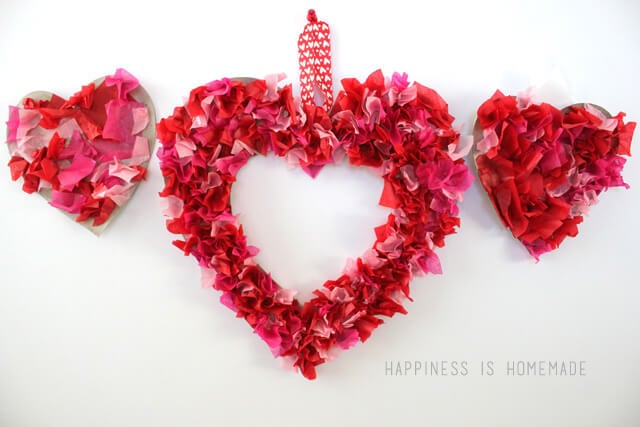
Tissue Paper Heart Wreath
Cut a heart shape from cardstock and then cut out an inner heart, so that it resembles a wreath. Coat the wreath with glue, then add pinched squares of tissue paper until it’s covered with little colorful tufts. When dry, hang it with a piece of string.
Why it works: Crumpling paper and placing carefully onto the glue can strengthen hand muscles and provide a feeling of satisfaction.
Elementary-Aged
Conversation Heart Bracelets
String pony beads and letter beads onto pipe cleaners. When complete, form into a circle and twist the ends to connect.
Why it works: Combines creativity with sequencing and can spark conversations about feelings and words.
Stained Glass Hearts
Cut a heart frame out of construction paper, with the inside removed. Lay it on a piece of clear contact paper, then place small squares of tissue paper flat inside the shape, slightly overlapping, to create a stained glass craft. Hang it where light will shine through once dry.
Why it works: Combines dexterity with creativity and focus, and the finished piece gives kids a sense of pride when displayed in a window.
Love Bug Craft
Use pom-poms or paper hearts to create the body, add googly eyes and pipe cleaner antennas to decorate a love bug!
Why it works: Silly, lighthearted crafting that invites laughter and imagination.
Scratch-Off Hearts
Color heavily with crayons, paint over it with black paint, and allow it to dry. Then, lightly scratch designs in the black to reveal the colors below.
Why it works: Adds an element of surprise and exploration with minimal cleanup.
Salt Dough Ornaments
Mix 1 cup flour and ½ cup salt in a bowl then slowly add up to ½ cup warm water until a dough forms. Knead for a few minutes until smooth and not sticky, then roll out and cut shapes, or form shapes by hand. Use a straw to poke a hole for hanging. Allow to air dry for 24-48 hours, flipping once, or bake at 200 degrees for 1-2 hours. Paint and enjoy!
Why it works: Mixing and kneading dough is naturally calming and grounding, making this a great sensory activity.
Tweens
Valentine Bookmarks
Decorate cardstock rectangles with washi tape, stickers, or drawings.
Why it works: Functional crafts can be especially appealing to older kids who like practical outcomes.
Affirmation or Activity Spinner
Create a paper circle and divide in into sections using crayons or markers. Write in each section either affirmations and encouraging phrases (to make this a confidence-builder) or silly actions to complete (to make it an activity). Cut a simple arrow shape from scrap paper. Poke a hole in the center of the circle and a matching hole at the base of the arrow, and attach the two with a metal brad. Take turns spinning the arrow and reading the message it lands on.
Why it works: Supports emotional awareness and reinforces positive self-concept.
String Art Hearts
Cut a heart out of cardstock or cardboard and punch holes along the outside edge. Weave yarn in and out to create heart designs. Or, on a piece of wood, hammer nails in a heart shape. Wind craft string in a crisscross pattern to all of the nails to create beautiful string art.
Why it works: Encourages patience, focus, and a sense of accomplishment. Great for kids who enjoy structure.
Paper Heart Garland
Using 6–8 inch strips of construction paper, start by folding the strips in half. Layer two strips stacked on the fold, and staple just above the fold. Take the ends of the second strip and fold them down to create a heart shape, and hold in place. Take a third strip and layer its fold on the area you are holding, then staple together, fold the ends of the third piece down into a heart and repeat to create a chain of hearts. When finished, fold the ends of the first strip up into a heart and staple.
Why it works: Creating decor for the home can brighten spirits and build self-confidence.
The Bigger Picture
Crafting together isn’t about the final product, it’s about shared experience. It’s about sitting side by side, creating space for conversation (or quiet), and giving children permission to explore without fear of being “wrong.” Whether you’re working with one child, a sibling group, or a table full of friends, these moments of creativity help build connection, confidence, and calm. Sometimes the most meaningful therapy looks a lot like glue sticks, laughter, and paint-covered hands!